 The Freedom Theatre and Artists on the Frontline. “Kite Making.” Global Performance Studies, vol. 7, no. 1, 2024, https://doi.org/10.33303/gpsv7n1a229
The Freedom Theatre and Artists on the Frontline
The Freedom Theatre is a theatre and cultural centre in Jenin refugee camp, occupied Palestine. We stage professional theatre productions; hold theatre workshops in the refugee camp, Jenin town, and villages; offer training in acting, pedagogy, and photography; and publish books, exhibitions, and short films.
Since we opened our doors in 2006, we have made theatre and visual art available to every young person in Jenin refugee camp. Our work has made Jenin refugee camp known in Palestine and internationally for innovative, thought-provoking theatre and media productions. We have created a generation of artists and leaders, who one day will be at the forefront of the Palestinian liberation movement.
Artists on the Frontline is a creative force for radical artists using culture as a form of resistance.
Led by those at the forefront of social and political transformation, we work at the intersection of arts, activism, and politics, creating everything from theatre to protest performance, virtual reality to immersive audio, platforms for citizen journalism and digital archives.
Award-winning projects build space for groundbreaking, revolutionary, and uncensored exchanges—where bold ideas ignite action, innovative models of organising are born, and cultural resistance powers change.
Reproduced with permission from https://www.theculturalintifada.com/kite-making
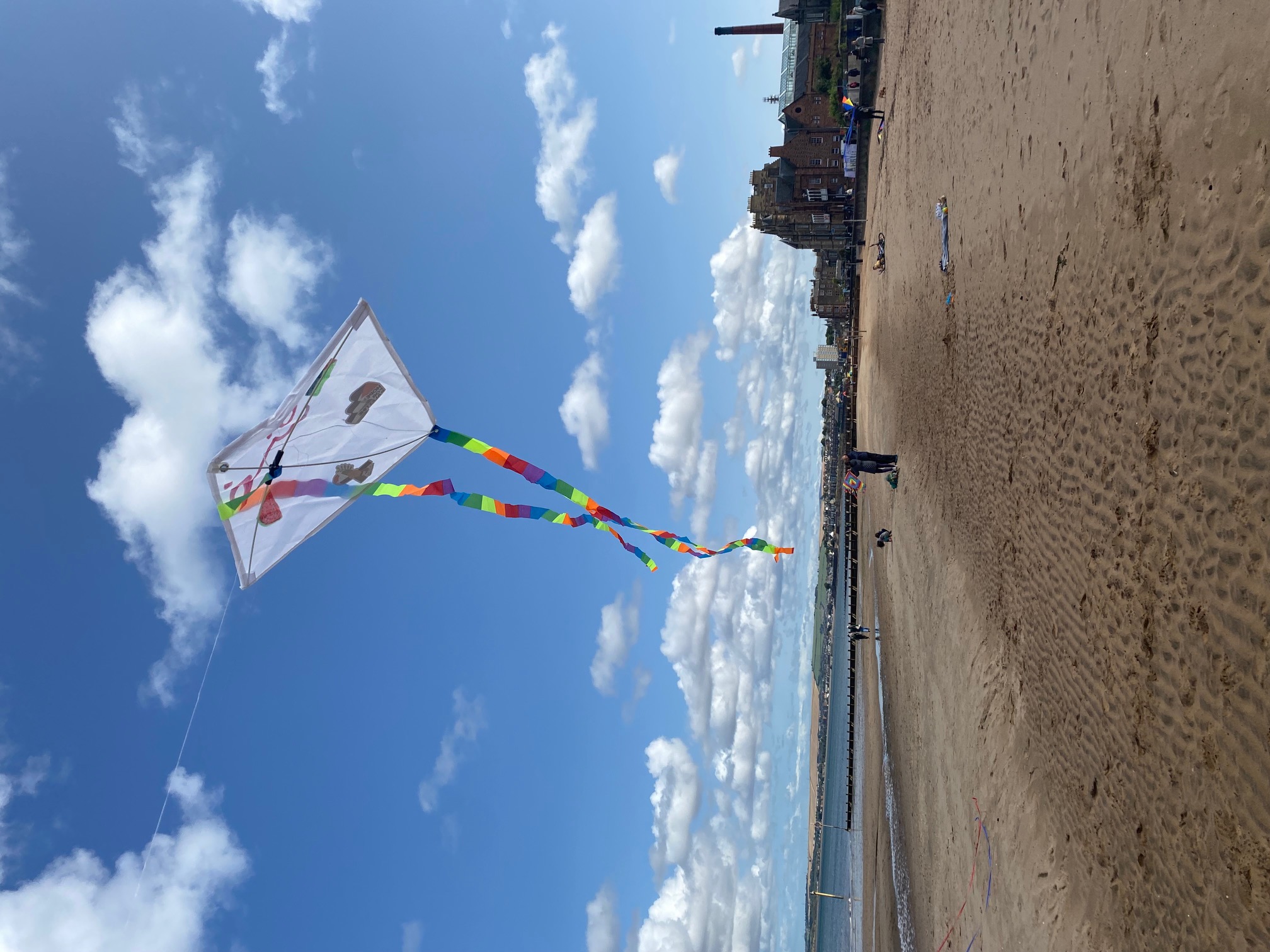
© Fiona Ferguson
Flying kites has long been a symbol of defiance and hope in Palestine. In 2011, 15,000 children in Gaza broke the world record for the largest number of kites flown simultaneously.
On the 7th of December, 2023, writer, academic, and poet Dr Refaat Alareer was murdered in a targeted attack. His last poem, “If I Die, You Must Live to Tell My Story,” used the image of a white kite.[1] Since then, white kites have been used as a symbol of solidarity in protests globally.
The designs and guide below are from the creative protest in New York organized by individual theatre-makers and Friends of the Freedom Theatre USA, Noor Theatre, Al Límite Collective, National Queer Theatre, Theatre of the Oppressed NYC, and Queers for a Liberated Palestine.
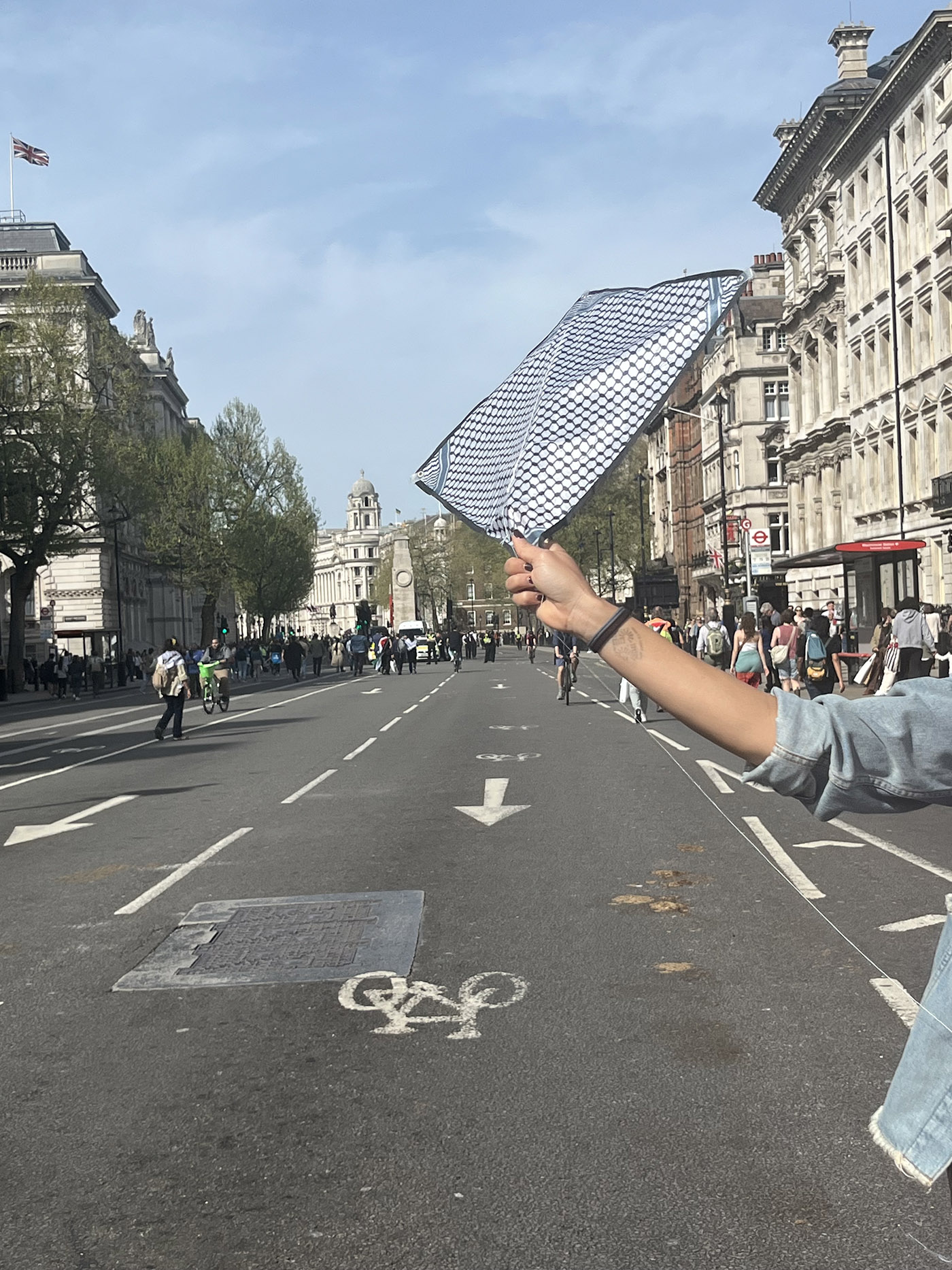
© Nahla Al Ageli
The designs and guide below are from the guerrilla festival organised by artists and Cultural Workers Parents For Palestine Cultural Workers Against Genocide at the Barbican Centre, London.
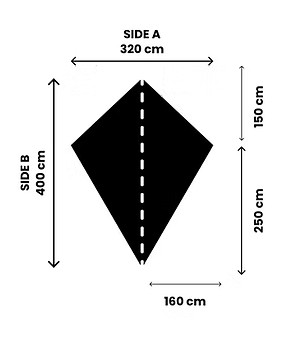
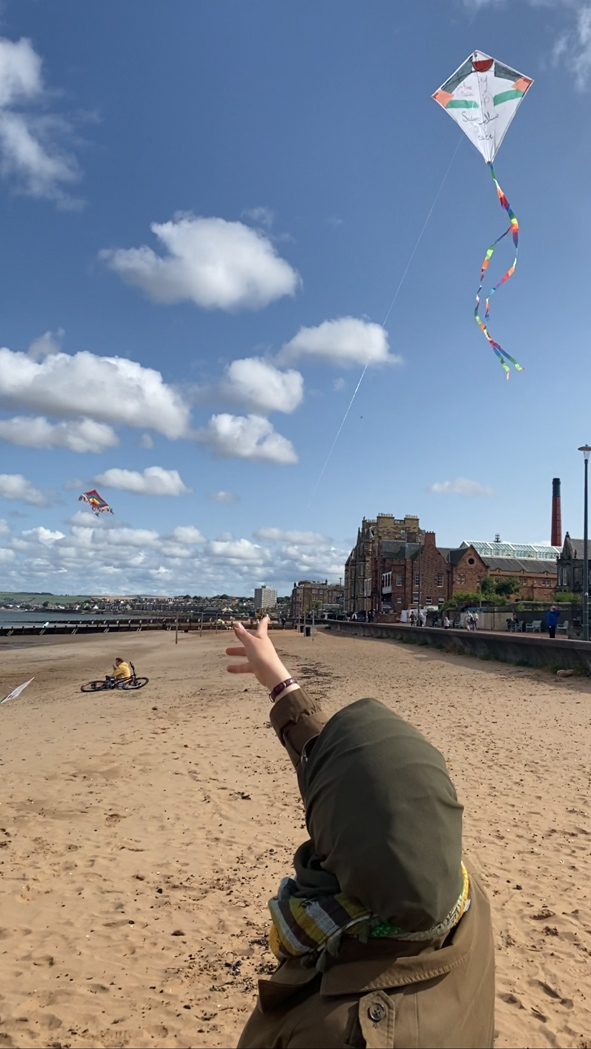
© Fiona Ferguson
[1] If I must die,
you must live
to tell my story
to sell my things
to buy a piece of cloth
and some strings,
(make it white with a long tail)
so that a child, somewhere in Gaza
while looking heaven in the eye
awaiting his dad who left in a blaze—
and bid no one farewell
not even to his flesh
not even to himself—
sees the kite, my kite you made, flying up above
and thinks for a moment an angel is there
bringing back love
If I must die
let it bring hope
let it be a tale
(Alareer 2023)
Alareer, Refaat. 2023. “If I must die.” https://ifimustdie.net/.